Corn dogs, funnel cake, cotton candy … Oh My!
The Carnival of HR has made it’s way to Training Time. We got our hands on some fantastic submissions this week and would like to say thanks to everyone who contributed.
Just one thing before you enter – please ride the Screamin’ Swing before you visit the funnel cake vendor. Thanks.
Looking for a new job? Want a new position at the Tilt-A-Whirl instead of the Gravitron?
Laurie at Punk Rock HR reminds us that “we are who we pretend to be – even on our resumes,” so be careful.
For all those “Moms” out there, Kelly at Fistful of Talent has some recommendations on how to find a job that meshes well with your family life.
Don’t underestimate your social media connections, says Lance aka. Your HR Guy. Value your connections, learn new things and apply those new things to make personal improvements.
Listen to Michael VanDervort’s advice at Human Race Horses on how to interview like your in show business and you may have a shot at the carnival’s main stage next year.
Amit Bhagria the Young HR Manager has some tips for coping with a corporate layoff.
And The HR Store is asking recent interviewees, “What are you doing about the interview feedback you receive?”
One carnie short of the perfect carnival? Looking to fill a position?
Visit Recruitment 2.0 and read Susannah Cesar’s three part series on recruiting graduates in a recession.
If you’re looking to save money, you can always skip the carnival games, or listen to Melanie Quinn’s advice on how retaining human capital makes sense and saves cents.
We learn by doing, but taking the “sink or swim” approach to promoting an employee to management can be dangerous. Instead, use some management transition tools suggested by David Giffin from i4cp.
When the time comes to choose new leaders, why not take a look at some other tried and true methods, asks Wally Bock at Three Star Leadership.
When you’re ready to formulate a leadership development program, head on over to Benifys HR Solutions where Vishveshwar Jatain will get you started.
Someone call security, we’ve got problems
Broken Ferris wheel again? It’s safe to say a bit of human error was probably involved. Sharlyn Lauby aka. the HR Bartender examines why some people get desperate when faced with failure.
Lacking feedback from your manager? Dan McCarthy at Great Leadership shares his advice on coaxing feedback out of a reluctant manager.
Or maybe it’s an accountability problem. Denise O’Berry at Ask the Team Doc says assigning people specific roles is worth it and will help your team.
Spend ten minutes with Naomi Bloom, in a post by Melissa Prusher of The Devon Group, and learn from her successful project management tips.
Bad employees are very similar to smelly diapers, just read Suzanne the Evil HR Lady would handle Mr. Stinky. If you can’t change it, get rid of it, she says.
From smells to bad attitudes, Susan Heathfield from Guide to Human Resources hears countless horror stories of the way employees were treated by their HR staff person.
Wondering why everyone is walking around with masks? The swine flu has hit the carnival, and India. Read B.P. Rao ‘s common sense advice on minimizing your flu risk.
While we’re on the subject of health... Evan Falchuk of See First Blog explains why he thinks health care reform is going badly.
Don’t be afraid to put your foot down and take a stand when problems arise, says Ben Eubanks of Upstart HR in his rules for new HR professionals.
Maybe it’s time to revamp your required carnie training courses. Use these tips from yours truly at Thoughts from Training Time to reinvigorate your training programs.
The carnival is getting high tech these days
In order for collaborative communities to thrive in the workplace, you’re going to need three necessary conditions, says Steve Boese of Steve's HR Technology Blog.
Gireesh Sharma of Talent Junction explains the importance of HR data for a CEO, especially when you’re an entrepreneur pitching to investors.
Sakib Khan, of HR with Sakib Khan, explains how Google Wave can improve collaboration and HR.
And take a deeper look at the power of sticks and carrots at Prasad Kurian’s Blog on HR.
Integrating your networking and collaboration tools with enterprise systems might improve your chances of influencing behaviors that improve performance, says Mark Bennett of Talented Apps.
Also think about how a rollout plan could ease the integration of a new analytics initiative into your HR and business culture at Infohrm.
Of course, you gotta have some fun at the carnival
Invite your team to a “Night Out in August,” says April Downing of Pseudo HR. Set the budget, pick a restaurant, and set aside some time for your team to discuss what’s going on at work.
Or use Drew Tarvin’s tips from Humor That Works on how to build a better global team.
Sometimes you just have to accept that work is largely out of your control. So, find one thing that revives your sense of freedom this summer, says Mark Stelzner of Inflexion Advisors.
Showing posts with label teamwork. Show all posts
Showing posts with label teamwork. Show all posts
Wednesday, August 19, 2009


Monday, June 8, 2009
Harnessing the power of group productivity
Does the number of people in a group improve the group’s productivity or does it just enable more in the group to slack off?
The authors at PsyBlog explained the answer in a post about the psychological effects group dynamics can have on productivity. It turns out that many workers will use the cover of group work to slack off.
Psychologists call the workplace phenomenon social loafing. And it’s the reason why you may want to think twice the next time you start adding more employees to a group when you want them to complete more work.
Since the idea was introduced in the 1890s, researchers have fount that social loafing can affect people in a wide range of group settings. From pulling ropes to yelling and even clapping, when people were in groups of six or larger their output was only one-third of what it was on their own.
The author does note that the findings don’t necessarily translate to groups focused on knowledge-based production:
However, it may be easy to find examples of social loafing in our own group work or in the actions of a former group member.
Why do people slack off in groups?
Standard explanations for the social loafing effect involve three main factors:
Understanding the reasons behind social loafing can help us reduce it. Here’s how the author suggests deterring it:
Unfortunately, most of us have either been guilty of slacking off in a group setting or have had to deal with a social loafer at one time or another. Knowing how to deal with those slackers can make a big difference in the group’s productivity.
How do you deter employees from “social loafing” in group work settings? What have you found that worked or failed to keep employees contributing equally?
The authors at PsyBlog explained the answer in a post about the psychological effects group dynamics can have on productivity. It turns out that many workers will use the cover of group work to slack off.
Psychologists call the workplace phenomenon social loafing. And it’s the reason why you may want to think twice the next time you start adding more employees to a group when you want them to complete more work.
Since the idea was introduced in the 1890s, researchers have fount that social loafing can affect people in a wide range of group settings. From pulling ropes to yelling and even clapping, when people were in groups of six or larger their output was only one-third of what it was on their own.
The author does note that the findings don’t necessarily translate to groups focused on knowledge-based production:
For example a group problem-solving session relies on the brains of the best people in the group - social loafing wouldn't necessarily reduce productivity in this group as markedly.
However, it may be easy to find examples of social loafing in our own group work or in the actions of a former group member.
Why do people slack off in groups?
Standard explanations for the social loafing effect involve three main factors:
- Expectations - That person is probably slacking off, so I can slack off too.
- Anonymity - When the work is spread out, so is the blame.
- Standards - Most groups fail to establish clear standards, so some will be confused about how much they need to do.
Understanding the reasons behind social loafing can help us reduce it. Here’s how the author suggests deterring it:
- Task importance. If workers think the task is important enough, they’ll work harder and slack off less.
- Group importance. When workers can identify with the group or feel a better sense of belonging, they’re less likely to partake in social loafing.
- Understanding workloads. Or as the author explains it, the “sucker effect” is when you feel misled when you think others in the group are slacking off. Understanding that everyone has a responsibility can eliminate such feelings.
Unfortunately, most of us have either been guilty of slacking off in a group setting or have had to deal with a social loafer at one time or another. Knowing how to deal with those slackers can make a big difference in the group’s productivity.
How do you deter employees from “social loafing” in group work settings? What have you found that worked or failed to keep employees contributing equally?
Monday, March 2, 2009
Taking steps to improve employee morale
To deal with the recession and the effect it’s having on the workforce, more employers are taking steps to improve morale in their companies, according to a new survey by Accountemps.
Almost seven out of ten (68%) chief financial officers (CFOs) interviewed said they are implementing strategies to uplift their teams’ mood. However, more than one-quarter (26%) of executives say their organizations have done nothing to boost morale.
CFOs were asked, “In the past 12 months, what steps, if any, has your company taken to improve employee morale?” They chose the following responses (multiple responses were allowed):
While finding ways to improve dwindling sales numbers may be at the top of your ‘to-do’ list right now, it would be worth your while to work employee morale into the top slot of that list as well.
Past surveys have shown that the economy has been bringing employee engagement down with it. Companies that work to counteract the economy’s effects by keeping employees motivated and engaged will find more success when the market turns around.
What is your company doing to improve morale despite the economic downturn? Please share any suggestions you may have for motivating employees during a recession.
You can also check out some of these posts for ideas on improving employee morale on a budget:
The one thing employees want at work
10 low-cost employee incentive ideas
5 tips to build employee morale in a down economy
Employee incentive ideas on a budget
Looking for new employee incentive ideas? Listen to Aretha Franklin
Almost seven out of ten (68%) chief financial officers (CFOs) interviewed said they are implementing strategies to uplift their teams’ mood. However, more than one-quarter (26%) of executives say their organizations have done nothing to boost morale.
CFOs were asked, “In the past 12 months, what steps, if any, has your company taken to improve employee morale?” They chose the following responses (multiple responses were allowed):
- Increased frequency, quality of communication (37%)
- Offered additional financial rewards (18%)
- Provided additional professional development opportunities (18%)
- Conducted additional team-building activities (18%)
- Enhanced employee recognition programs (15%)
- No steps taken (26%)
While finding ways to improve dwindling sales numbers may be at the top of your ‘to-do’ list right now, it would be worth your while to work employee morale into the top slot of that list as well.
"Employee motivation should be a continual priority for businesses, but in a period of economic uncertainty, managers need to invest even more time and effort into maintaining team morale," said Max Messmer, chairman of Accountemps. "Companies that work diligently to keep their top performers engaged improve their chances to retain these key contributors."
Past surveys have shown that the economy has been bringing employee engagement down with it. Companies that work to counteract the economy’s effects by keeping employees motivated and engaged will find more success when the market turns around.
What is your company doing to improve morale despite the economic downturn? Please share any suggestions you may have for motivating employees during a recession.
You can also check out some of these posts for ideas on improving employee morale on a budget:
The one thing employees want at work
10 low-cost employee incentive ideas
5 tips to build employee morale in a down economy
Employee incentive ideas on a budget
Looking for new employee incentive ideas? Listen to Aretha Franklin
Monday, December 1, 2008
Creativity, innovation and happiness at work
The key to innovation is happiness at work, says Chief Happiness Officer Alexander Kjerulf.
In a recent post on one of his favorite subjects, Alexander shared some insightful take-aways from a trip to London to attend the Top Dog Live innovation conference. This year’s theme - innovation in tough times.
Whether you’re working in London or in the U.S., the theme is especially fitting today with the National Bureau of Economic Research officially stating that the U.S. is in a recession and has been for the past year.
As our economy struggles, businesses continue to make decisions that cut back on work benefits that foster innovation, including training and development. Those decisions are “precisely the wrong thing to do,” says Alexander, reminding us that “a crisis is a terrible thing to waste.”
Alexander’s main take-away from the event was the focus on people and how to make employees happy at work. The majority of conversations dealt less with compensation and stock options, and were more centered around “praise, recognition, good leadership, openness, trust, freedom and fun in the workplace.”
Like Alexander writes about in most of his posts, happy employees are more creative. According to Harvard Business School Research:
In order to harness that creativity, more businesses must understand the importance of play and playfulness in the workplace. At Presentation Zen, Garr Reynolds examined the belief that “play is good for you” and for business. In the post he shares a video of Tim Brown, CEO of Ideo, making a presentation on the subject.
Watch Tim Brown’s presentation below and visit Presentation Zen to read Garr’s summary of the most important points.
Use this holiday season to boost employee creativity and bring more happiness into your workplace, read these related posts:
How to improve morale during the holidays
Employee recognition ideas on the cheap, it’s easier than you think
Employee engagement down, how training can help
Friday office humor: Dodgeball at work
In a recent post on one of his favorite subjects, Alexander shared some insightful take-aways from a trip to London to attend the Top Dog Live innovation conference. This year’s theme - innovation in tough times.
Whether you’re working in London or in the U.S., the theme is especially fitting today with the National Bureau of Economic Research officially stating that the U.S. is in a recession and has been for the past year.
As our economy struggles, businesses continue to make decisions that cut back on work benefits that foster innovation, including training and development. Those decisions are “precisely the wrong thing to do,” says Alexander, reminding us that “a crisis is a terrible thing to waste.”
Alexander’s main take-away from the event was the focus on people and how to make employees happy at work. The majority of conversations dealt less with compensation and stock options, and were more centered around “praise, recognition, good leadership, openness, trust, freedom and fun in the workplace.”
Like Alexander writes about in most of his posts, happy employees are more creative. According to Harvard Business School Research:
If people are in a good mood on a given day, they’re more likely to have creative ideas that day, as well as the next day, even if we take into account their mood that next day.
There seems to be a cognitive process that gets set up when people are feeling good that leads to more flexible, fluent, and original thinking, and there’s actually a carryover, an incubation effect, to the next day.
In order to harness that creativity, more businesses must understand the importance of play and playfulness in the workplace. At Presentation Zen, Garr Reynolds examined the belief that “play is good for you” and for business. In the post he shares a video of Tim Brown, CEO of Ideo, making a presentation on the subject.
In this wonderful short presentation Tim makes many salient points about the role of play, playfulness, and creativity and why they matter in our professional or academic lives. You may be a designer of consumer goods, or a medical doctor, or a researcher, or a teacher — every situation is different. But listen to what Tim Brown says and ask yourself how the idea of play might be introduced into your organization in a way that would benefit workers, patients, and students, not only in terms of productivity but also in terms of simply having people feel better (and isn't there a correlation?).
Watch Tim Brown’s presentation below and visit Presentation Zen to read Garr’s summary of the most important points.
Use this holiday season to boost employee creativity and bring more happiness into your workplace, read these related posts:
How to improve morale during the holidays
Employee recognition ideas on the cheap, it’s easier than you think
Employee engagement down, how training can help
Friday office humor: Dodgeball at work
Tuesday, November 25, 2008
Top rewards of hiring veterans
The training and long hours spent preparing for the battlefield has proven to pay off for veterans when leaving the military and entering the civilian workforce. In hiring veterans, employers report added rewards after onboarding these employees including responsibility, teamwork and the ability to work under pressure.
Almost four in 10 (38%) of human resource professionals nationwide have hired a war veteran in the past three years, according to a study by the Society for Human Resource Management (SHRM).
The study also found that hiring veterans is even more popular in government entities, with 67% hiring a veteran. Half of publicly owned, for-profit companies report hiring a returning combat veteran.
Among employers who reported hiring veterans of the Iraq and Afghanistan wars:
The situations soldiers are put in during training and deployment required them to “grow up fast,” according to Bryan Zawikowski, vice president of the military transition division at the Lucas Group, in a recent Human Resource Executive Online article.
As they complete their enlistment time, "a young officer at the age of 30 can have responsibilities greater than most [workers] in the private sector," said Zawikowski.
While veterans entering the workforce may need help transitioning and will have to adapt their skills to new tasks, their active-duty experiences have equipped them to meet those challenges, he added.
For employers looking to hire veterans and advice for transitioning soldiers, check out the following online resources:
Almost four in 10 (38%) of human resource professionals nationwide have hired a war veteran in the past three years, according to a study by the Society for Human Resource Management (SHRM).
The study also found that hiring veterans is even more popular in government entities, with 67% hiring a veteran. Half of publicly owned, for-profit companies report hiring a returning combat veteran.
Among employers who reported hiring veterans of the Iraq and Afghanistan wars:
- 95% said the benefit of hiring vets is they have a “strong sense of responsibility.”
- 94% said they have the ability to “work as part of a team.”
- 93% said they “see a task through to completion.”
- 92% said veterans have the ability to “work under pressure.”
The situations soldiers are put in during training and deployment required them to “grow up fast,” according to Bryan Zawikowski, vice president of the military transition division at the Lucas Group, in a recent Human Resource Executive Online article.
As they complete their enlistment time, "a young officer at the age of 30 can have responsibilities greater than most [workers] in the private sector," said Zawikowski.
While veterans entering the workforce may need help transitioning and will have to adapt their skills to new tasks, their active-duty experiences have equipped them to meet those challenges, he added.
"By the time they come out of the military, they are used to learning new things, used to training and used to being held accountable for their performance and the performance of their team," said Zawikowski.
For employers looking to hire veterans and advice for transitioning soldiers, check out the following online resources:
Thursday, November 20, 2008
How to improve morale during the holidays
Maybe it’s because of the canceled company holiday party or low year-end sales numbers, but it seems like this holiday season is lacking the same excitement surrounding past years.
Even when the economy was doing great, the holidays always have a way of distracting us from the things we need to get done around the office. With everything going on in employees’ lives outside of work, it can be tough to find the motivation to tackle that to-do list by the time New Year’s rolls around.
Here are a few tips to motivate employees and boost morale during the holidays:
Don’t wait until January 2 to start improving employee morale around the office, get going now. With simple ideas and some creativity, a little bit of effort on your part can go a long way.
Even when the economy was doing great, the holidays always have a way of distracting us from the things we need to get done around the office. With everything going on in employees’ lives outside of work, it can be tough to find the motivation to tackle that to-do list by the time New Year’s rolls around.
Here are a few tips to motivate employees and boost morale during the holidays:
- Food. Throughout the year, especially during the holidays, food has magical way of bringing people together. Hold a bake sale, coordinate a luncheon or bring in a bag of bagels for your coworkers. It’s a quick way to lift everyone’s spirits without anyone having to spend a lot of money.
- Compliments. Encourage supervisors to hand out compliments to employees when they notice positive work or achievements. Compliments are also an immediate way to lift spirits and make employees feel confident in their work. And, they’re free. Simply saying “thank you” can do wonders for employee morale.
- Holiday cards. Business holiday cards are just a small way businesses can show their appreciation for all of the hard work employees have put in throughout the year. Take a few minutes to write a hand-written message on the inside of the card to add a personal touch.
- Fun. Find simple ways to improve morale at work every day. Hold contests, bring in pizza for lunch or make up a nonsense holiday, like “Funny Hat Day.” Decorate the office with winter decorations to brighten up the office and encourage teamwork. Keep it simple, just focus on getting everyone involved and having a great time.
- Humor. Hold an event that brings some laughter into the office. Organize an office-wide activity where supervisors hand out funny awards to employees. Not every employee views formal awards as fair, or feel left out. Funny awards get everyone laughing, whether they receive an award or not. You don’t have to spend a dime on this one either. Use supplies in the office to create awards that everyone will love. A word of caution - keep awards focused on what people did well, not on something they failed to do.
Don’t wait until January 2 to start improving employee morale around the office, get going now. With simple ideas and some creativity, a little bit of effort on your part can go a long way.
Friday, November 14, 2008
Friday office humor: Dodgeball at work
Apart from paying new hires to quit, encouraging employees to Tweet and extending their product line to include much more than shoes, there's still another reason why Zappos is one of the most exciting companies to work for - dodgeball.
The popular online shoe company has organized daily dodgeball games to relieve workplace stress and get employees moving during the afternoon. Following strict rules to keep the game "fair, friendly, and safe," employees still have fun interacting with each other through the popular childhood game.
From the Inside Zappos blog:
Some first-hand video footage of recess time at Zappos:
Happy Friday!
The popular online shoe company has organized daily dodgeball games to relieve workplace stress and get employees moving during the afternoon. Following strict rules to keep the game "fair, friendly, and safe," employees still have fun interacting with each other through the popular childhood game.
From the Inside Zappos blog:
"As a stress reliever from planning warehouse budgets, making purchases, hiring and handling all benefits paperwork, writing scripts to run site manager, and becoming friends with OSHA; the admin team wants to throw something!!!
They decided to start a friendly game of dodge ball, the all time favorite recess sport! Dodge ball is played daily at 3pm in the upstairs office. What a great work out and stress reliever! Kudos, my friends, and remember... safety first!"
Some first-hand video footage of recess time at Zappos:
Happy Friday!
Monday, October 27, 2008
Employee performance reviews, just say no?
One-sided, negative and intimidating are just a few words that come to mind when thinking about employee performance reviews. The corporate world should just get rid of it says UCLA professor Samuel Culbert in a recent Wall Street Journal article.
Here are just a few of Culbert’s reasons why he finds performance reviews “ill-advised and bogus” (read all seven in the full WSJ article):
The solution - performance previews.
Performance previews are a way to conduct performance reviews that are two-sided with shared accountability. According to Culbert:
As opposed to an annual meeting, previews should be held each time the boss or team member feels the group is not working well together. Previews promote “straight-talk relationships” for those who are ready to step up to the challenge. Instead of using a method that focuses on flaws, previews can identify solutions on how teams can accomplish business goals together.
Culbert believes feedback and trust are essential to the success of performance previews:
Convincing the corporate world to overhaul such a long-standing employee performance review system would take many years and many strong opinions to accomplish. With powerful ideas from scholars like Culbert, a new system focused on teamwork may not be that far off in the distance.
If you’re looking for ways to improve your employee performance reviews, read Culbert’s full WSJ article on how performance previews can improve the way your team works.
“To my way of thinking, a one-side-accountable, boss-administered review is little more than a dysfunctional pretense. It's a negative to corporate performance, an obstacle to straight-talk relationships, and a prime cause of low morale at work. Even the mere knowledge that such an event will take place damages daily communications and teamwork.”
Here are just a few of Culbert’s reasons why he finds performance reviews “ill-advised and bogus” (read all seven in the full WSJ article):
- Mind-sets are out of sync. Going into a performance review, bosses are generally concerned with improving performance while the subordinate is focused on small issues including compensation, job progression and career advancement. The disconnect puts the review participants at odds, “talking past each other.”
- Objectivity is “preposterous.” Despite popular belief, performance reviews are not objective. “Where you stand determines what you see,” according to Culbert. It is almost impossible for any assessment to be independent of the evaluator’s motives.
- “One size fits all” doesn’t fit. No two employees are the same, but performance reviews measure all employees on a predetermined checklist. Pleasing the boss becomes more important than doing a good job.
- Reviews undermine teamwork. Bosses have all the power during performance reviews. Instead of taking a team approach during the evaluation by asking the subordinate “How are we going to work together as a team?” It’s more like “How are you performing for me?”
The solution - performance previews.
Performance previews are a way to conduct performance reviews that are two-sided with shared accountability. According to Culbert:
“Previews are problem-solving, not problem-creating, discussions about how we, as teammates, are going to work together even more effectively and efficiently than we've done in the past. They feature descriptive conversations about how each person is inclined to operate, using past events for illustrative purposes, and how we worked well or did not work well individually and together.”
As opposed to an annual meeting, previews should be held each time the boss or team member feels the group is not working well together. Previews promote “straight-talk relationships” for those who are ready to step up to the challenge. Instead of using a method that focuses on flaws, previews can identify solutions on how teams can accomplish business goals together.
Culbert believes feedback and trust are essential to the success of performance previews:
“The best you can do for others is to develop a trusting relationship where they can ask for feedback and help when they see the need and feel sufficiently valued to take it.”
Convincing the corporate world to overhaul such a long-standing employee performance review system would take many years and many strong opinions to accomplish. With powerful ideas from scholars like Culbert, a new system focused on teamwork may not be that far off in the distance.
If you’re looking for ways to improve your employee performance reviews, read Culbert’s full WSJ article on how performance previews can improve the way your team works.
Tuesday, October 14, 2008
Corporate team building hot from the oven
Company picnics step aside, there’s a new player heating up the corporate team building scene taking companies out of the office and into the kitchen to create unforgettable company events.
Parties That Cook uses hands-on team building cooking classes to encourage teamwork, boost morale, build culinary confidence and foster camaraderie.
From MSNBC:
Whether teams are creating delicious appetizers, four-course sit-down dinners, or battling each other in Iron Chef inspired cooking competitions, the events encourage teamwork in an exciting, creative atmosphere.
Parties That Cook proves that with some creativity, corporate team building can be exciting and fun. While Parties That Cook is currently limited to San Francisco, Chicago and Los Angeles, you could look into private cooking classes in your area or find a local chef to host an event at a coworkers house.
Look for the top qualities of a great team building event:
Have you ever been a part of an “out of the box” corporate team building event like Parties That Cook? Do you think it was more effective than more traditional events?
Parties That Cook uses hands-on team building cooking classes to encourage teamwork, boost morale, build culinary confidence and foster camaraderie.
From MSNBC:
“Food is a universal language and it just brings people together. It’s a great thing to do for corporate team building”, said Bibby Gignilliat, founder of Parties that Cook, which is feeding the need for corporate team building.
Gignilliat says bringing colleagues together and having them prepare a meal together spices up competition between co-workers. The result? Dinner garnished with camaraderie, served with a side of competitive edge.
“Building consensus, communicating is really important, goal setting, meeting deadlines," said Gignilliat. "All that can go back to the office."
Whether teams are creating delicious appetizers, four-course sit-down dinners, or battling each other in Iron Chef inspired cooking competitions, the events encourage teamwork in an exciting, creative atmosphere.
Parties That Cook proves that with some creativity, corporate team building can be exciting and fun. While Parties That Cook is currently limited to San Francisco, Chicago and Los Angeles, you could look into private cooking classes in your area or find a local chef to host an event at a coworkers house.
Look for the top qualities of a great team building event:
- Goal oriented. The event is organized and structured in such a way that you will achieve your team building goals.
- Cost effective. Can you reach your team building goals while staying within your budget?
- Practical. The activities during the event should directly relate to the objectives you set out with.
- Fun. Make sure every participant is able to enjoy themselves during the event.
- Cross-generational. Ensure that employees from every age group can participate and have fun at the event.
- Memorable. Choose an event where employees will remember the great time they had and bring the lessons they learned back to the office.
Have you ever been a part of an “out of the box” corporate team building event like Parties That Cook? Do you think it was more effective than more traditional events?
Wednesday, September 24, 2008
De-stress at work and encourage innovation
The economy is in bad shape. So bad even Warren Buffett is worried.
Whether its the falling dollar, gas prices or debt, our country’s financial problems have all of us pretty stressed out these days. Aside from some of the more violent effects of a bad economy on the workplace, stress has a direct impact on employee productivity and your bottom line.
According to the 2007 “Stress in America Report” by the American Psychological Association, more than half of Americans said they are less productive at work as a result of stress.
From Entrepreneur.com:
On top of the economy, the bleak medical benefits situation in the US is stifling innovation. As medical premiums and medical deductibles rise, more money is taken out of paychecks and people have less money to spend. Innovation is difficult to find when employees are overwhelmed with medical bills.
While we can’t change our country’s health care system or improve the economy overnight, we can do something to help lessen employee stress at work. Get their minds off their finances and focused on innovation, and you’ll start seeing happier, more productive employees with better ideas coming out of your company.
A few ideas to de-stress employees and spark innovation:
Start a Fantasy Football league. It’s helped some big companies like NuVox motivate their staff and build teamwork. Some friendly office competition that doesn’t take employees away from their work for too long can help alleviate stress.
Start a skunkworks program or innovation league. It’s hard to get businesses to take risks in a bad economy. Sideline any fear of risk and start a company within your company (called Skunkworks) where innovation is encouraged. Once all of the “real” work is done, get together with the skunkworks team to innovate and empower employees. It can be as little as four hours a week, or more depending on how much time is available.
Start an employee wellness program. Regular exercise improves health and reduces stress. Start a weekly walking program or make a deal with a local gym for discounted employees memberships, and get employees moving. Healthier employees make less trips to the doctor, reducing medical costs and insurance rates.
Start telecommuting. Allow employees to telecommute for part of the week. Just reducing an employee’s weekly commute by one day can make a big dent in how much they spend each month in gas. By spending less money commuting to the office, employees will have one less thing to worry about financially.
Unless you have $800 million in your back pocket, no one is going to solve the nation’s financial crisis anytime soon. Until the economy begins to turn around, all we can do is work to mold company cultures to help de-stress employees and encourage innovation.
Whether its the falling dollar, gas prices or debt, our country’s financial problems have all of us pretty stressed out these days. Aside from some of the more violent effects of a bad economy on the workplace, stress has a direct impact on employee productivity and your bottom line.
According to the 2007 “Stress in America Report” by the American Psychological Association, more than half of Americans said they are less productive at work as a result of stress.
From Entrepreneur.com:
“All that stress adds up to an estimated $300 billion a year in costs for U.S. businesses due to absenteeism, decreased productivity, employee turnover, and medical, legal and insurance fees.”
On top of the economy, the bleak medical benefits situation in the US is stifling innovation. As medical premiums and medical deductibles rise, more money is taken out of paychecks and people have less money to spend. Innovation is difficult to find when employees are overwhelmed with medical bills.
While we can’t change our country’s health care system or improve the economy overnight, we can do something to help lessen employee stress at work. Get their minds off their finances and focused on innovation, and you’ll start seeing happier, more productive employees with better ideas coming out of your company.
A few ideas to de-stress employees and spark innovation:
Start a Fantasy Football league. It’s helped some big companies like NuVox motivate their staff and build teamwork. Some friendly office competition that doesn’t take employees away from their work for too long can help alleviate stress.
Start a skunkworks program or innovation league. It’s hard to get businesses to take risks in a bad economy. Sideline any fear of risk and start a company within your company (called Skunkworks) where innovation is encouraged. Once all of the “real” work is done, get together with the skunkworks team to innovate and empower employees. It can be as little as four hours a week, or more depending on how much time is available.
Start an employee wellness program. Regular exercise improves health and reduces stress. Start a weekly walking program or make a deal with a local gym for discounted employees memberships, and get employees moving. Healthier employees make less trips to the doctor, reducing medical costs and insurance rates.
Start telecommuting. Allow employees to telecommute for part of the week. Just reducing an employee’s weekly commute by one day can make a big dent in how much they spend each month in gas. By spending less money commuting to the office, employees will have one less thing to worry about financially.
Unless you have $800 million in your back pocket, no one is going to solve the nation’s financial crisis anytime soon. Until the economy begins to turn around, all we can do is work to mold company cultures to help de-stress employees and encourage innovation.
Wednesday, September 17, 2008
Training employees to go green in the office
Going green in the office is more than just a trend. By improving the energy efficiency of office buildings, businesses can save money on pricey electric bills and protect the earth’s precious resources.
Because it’s where workers spend a large portion of their day, the American workplace is where people can make the largest impact by going green. Training employees to reduce waste office waste can take time, but with a little help you can get everyone on board and involved.
With most people already doing their part at home to save energy, the EPA encourages people to “Bring their Green to Work” with their latest online tool called Energy Star @ Work.
Revealed earlier this month, Energy Star @ Work provides people with valuable tips and information on how workers can save energy and do their part to protect the environment in the workplace.
Start a green movement in your office
Get employees to go green at the office and get involved by setting up green teams dedicated to the cause. With management’s approval, encourage coworkers from different levels and areas of your organization to get involved in the green movement. Forming a diversified team from all levels in the company will ensure greater support and success.
Hold green team meetings to discuss what areas of the business are the least energy efficient and what can be done to make improvements. Raise awareness throughout the office with emails, fliers and posters with information on how the business is going green and what they can do to help.
October is Energy Awareness Month and a perfect time to hold a green event in the office to get everyone excited and aware of the green team’s efforts. Get employees involved and informed by holding a brown bag luncheon with a featured in-house or outside expert to speak about ways to save energy in the office.
Another way to get employees involved in the company’s green efforts is to set up competitions. Divide employees by department or by Green Teams and start a competition to see who can be the most green in the office.
Hand out environmentally friendly prizes like reusable water bottles or coffee mugs to the teams that show the biggest improvements. Remember to publicly recognize teams for their energy efficient changes in company newsletters or at quarterly meetings.
Going green in the office doesn’t have to be difficult. With the support of upper management, involved employees and a little office camaraderie, your company can start doing its part to conserve energy and cut down on greenhouse gasses. It could be as simple as finding energy efficient office supplies or changing the posters on your walls, that could get your office started today.
“Energy use in commercial buildings and manufacturing plants accounts for nearly half of U.S. greenhouse gas emissions and nearly 50 percent of energy consumption nationwide,” according to the EPA.
Because it’s where workers spend a large portion of their day, the American workplace is where people can make the largest impact by going green. Training employees to reduce waste office waste can take time, but with a little help you can get everyone on board and involved.
With most people already doing their part at home to save energy, the EPA encourages people to “Bring their Green to Work” with their latest online tool called Energy Star @ Work.
Revealed earlier this month, Energy Star @ Work provides people with valuable tips and information on how workers can save energy and do their part to protect the environment in the workplace.
Start a green movement in your office
Get employees to go green at the office and get involved by setting up green teams dedicated to the cause. With management’s approval, encourage coworkers from different levels and areas of your organization to get involved in the green movement. Forming a diversified team from all levels in the company will ensure greater support and success.
Hold green team meetings to discuss what areas of the business are the least energy efficient and what can be done to make improvements. Raise awareness throughout the office with emails, fliers and posters with information on how the business is going green and what they can do to help.
October is Energy Awareness Month and a perfect time to hold a green event in the office to get everyone excited and aware of the green team’s efforts. Get employees involved and informed by holding a brown bag luncheon with a featured in-house or outside expert to speak about ways to save energy in the office.
Another way to get employees involved in the company’s green efforts is to set up competitions. Divide employees by department or by Green Teams and start a competition to see who can be the most green in the office.
Hand out environmentally friendly prizes like reusable water bottles or coffee mugs to the teams that show the biggest improvements. Remember to publicly recognize teams for their energy efficient changes in company newsletters or at quarterly meetings.
Going green in the office doesn’t have to be difficult. With the support of upper management, involved employees and a little office camaraderie, your company can start doing its part to conserve energy and cut down on greenhouse gasses. It could be as simple as finding energy efficient office supplies or changing the posters on your walls, that could get your office started today.
Tuesday, September 16, 2008
Top qualities of great team building exercises
Great team building exercises can strengthen group ties and encourage teamwork, at the same time employees learn something new. We all know a great training activity or team building activity when we see one, but what are the essential qualities of effective team building exercises?
According to Michael VanDervort at HumanRaceHorses:
Adding one more to the list, activities should also be fun. Creating fun team building activities gives people a break from their day-to-day work and facilitates learning in an informal atmosphere.
It’s always enjoyable to watch people learn something new about themselves and coworkers while they think they’re just having fun at work. It’s like getting a workout by playing with your kids and not realizing the calories you burned until your biceps hurt the next day. Everybody wins!
What other qualities do you think great team building exercises should possess? Please share any examples of training activities you’ve created or been a part of that you think encompass VanDervor’s qualities of a great team building activity.
According to Michael VanDervort at HumanRaceHorses:
Trainers are often looking for new team building exercises that they can offer to their business clients. Typically, such exercises should provide the following qualities so as to enhance the team-building experience:
- A challenging task, to focus the participants on creativity or problem-solving
- An element of competition to encourage both rivalry and cooperativeness
- An activity that is both difficult and achievable, to generate interest and the desire to bond with your teammates
- An element of rivalry, to create the desired “us vs. them” mentality needed for team-building activities when working with different groups.
Adding one more to the list, activities should also be fun. Creating fun team building activities gives people a break from their day-to-day work and facilitates learning in an informal atmosphere.
It’s always enjoyable to watch people learn something new about themselves and coworkers while they think they’re just having fun at work. It’s like getting a workout by playing with your kids and not realizing the calories you burned until your biceps hurt the next day. Everybody wins!
What other qualities do you think great team building exercises should possess? Please share any examples of training activities you’ve created or been a part of that you think encompass VanDervor’s qualities of a great team building activity.
Tuesday, September 9, 2008
Disaster planning: Would your company sink or swim?
While it looks like the southern US coast evaded Hurricane Ike for now, it reminds us how serious the threat of disaster is and the importance of being prepared. Does your business have what it takes to come back from a catastrophic event?
No matter where your business is located, disaster preparedness and continuity plans are critical to survival after a disaster. A lack of planning can have dire consequences.
According to the Association of Small Business Development Centers:
Whether your business is threatened by hurricanes, tornadoes, flood or man-made disasters like identity theft or crippling computer viruses, no business is immune to disaster. Blocked roads and flood waters may limit access even if your building suffers little damage.
What can you do to limit lost productivity and profits after a disaster? The first step is to put together a disaster recovery plan. A basic plan should include:
Once your disaster plan is in place, practice it and then practice it again. Train employees and supervisors on emergency procedures and what to do if they have limited or no access to the building.
Test your plan with emergency dry-runs and document performance. Look for ways to improve and update your plan wherever necessary.
The amount of lost time and productivity after a major disaster will ultimately come down to the effectiveness of your communication. With effective communication and employee cooperation, your business can keep recovery time to a minimum and your business standing after disaster.
No matter where your business is located, disaster preparedness and continuity plans are critical to survival after a disaster. A lack of planning can have dire consequences.
According to the Association of Small Business Development Centers:
- More than one quarter of businesses will experience a “significant crisis” every year.
- After a major disaster, 43% of businesses without an emergency plan will never reopen.
- Of those that do reopen, only 29% are still operating after two years.
Whether your business is threatened by hurricanes, tornadoes, flood or man-made disasters like identity theft or crippling computer viruses, no business is immune to disaster. Blocked roads and flood waters may limit access even if your building suffers little damage.
"How quickly a company gets back to business after a fire or flood, terrorist attack, tornado, or man-made crisis often depends on emergency planning done now," said Dr. Robert Leviton, president and chairman of the board of the Corporate Emergency Access System (CEAS).
What can you do to limit lost productivity and profits after a disaster? The first step is to put together a disaster recovery plan. A basic plan should include:
- Emergency contact numbers. Keep a current database of employee and emergency service phone numbers.
- Detailed communication plans. How will top management deliver information to employees after a catastrophic event?
- A list of critical tasks. Identify and distribute critical business operations to supervisors and employees.
- An off-site meeting place. Designate an off-site location for top management to meet in case your building is unaccessible.
- Customer communication plans. How will you communicate with customers on the status of their orders and deliver information to business clients?
- Data recovery plans. Natural and man-made disaster can easily wipe out hard drives and destroy databases. Keep critical back-up data at an outside location and have a plan on how to retrieve that information if disaster strikes.
Once your disaster plan is in place, practice it and then practice it again. Train employees and supervisors on emergency procedures and what to do if they have limited or no access to the building.
Test your plan with emergency dry-runs and document performance. Look for ways to improve and update your plan wherever necessary.
The amount of lost time and productivity after a major disaster will ultimately come down to the effectiveness of your communication. With effective communication and employee cooperation, your business can keep recovery time to a minimum and your business standing after disaster.
Monday, August 25, 2008
Dabbleboard: New online collaboration tool
Want to think and communicate visually with remote employees? Try Dabbleboard.
Dabbleboard is the latest online whiteboard tool helping teams communicate and share ideas from anywhere in the world. While there are other digital whiteboards out there, the biggest perks with Dabbleboard are how clean drawings come out and the ability to collaborate in real time.
Since most of us are very unskilled when it comes to drawing with a mouse, Dabbleboard recognizes common shapes (circles, lines, boxes, etc.) and redraws them neatly. Real-time collaboration makes it simple for multiple users to be in the program and drawing at the same time.
Dabbleboard produces attractive and easy to share documents. You can type and insert images anywhere on the board, stop working at any time and continue the drawing later by saving it for private or public use. Drawings can be emailed, downloaded in PNG format, or easily shared by sending a URL.
The coolest part - it’s free. So, take the tour and give it a try.
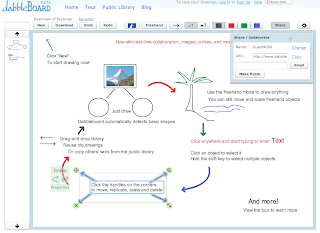
Dabbleboard is the latest online whiteboard tool helping teams communicate and share ideas from anywhere in the world. While there are other digital whiteboards out there, the biggest perks with Dabbleboard are how clean drawings come out and the ability to collaborate in real time.
Since most of us are very unskilled when it comes to drawing with a mouse, Dabbleboard recognizes common shapes (circles, lines, boxes, etc.) and redraws them neatly. Real-time collaboration makes it simple for multiple users to be in the program and drawing at the same time.
Dabbleboard produces attractive and easy to share documents. You can type and insert images anywhere on the board, stop working at any time and continue the drawing later by saving it for private or public use. Drawings can be emailed, downloaded in PNG format, or easily shared by sending a URL.
The coolest part - it’s free. So, take the tour and give it a try.
Thursday, August 21, 2008
Corporate volunteering builds teamwork, improves employee retention
Looking to build teamwork in the office, but running out of ideas? Ditch the office and volunteer.
More than just a fun day out, volunteering strengthens employee bonds and improves teamwork. Bosses value volunteering because of the positive image it creates for the company in the eyes of the community.
Of course the community will appreciate it, but your employees will love it. When employees are engaged, happy and know their employer is doing good in the community, they’ll be hard-pressed to leave.
Whether it’s painting a nursing home activity center, planting a garden or setting up a neighborhood playground, employees work toward a common goal that is tangible and something they can share pride in.
Major companies like IBM, Ernst & Young, and UPS have been featured in Forbes and the Wall Street Journal for their philanthropic work in the community. Some are even saying that getting paid to volunteer is the next trend in corporate perks.
Your company may not have the same size budget as major retailers and community service leaders like Gap and Target, you can still create a program where employees get paid to give back.
Designing a employee volunteer program starts with four key steps, according to Tory Johnson at World Volunteer Web. Employers must determine their goals for volunteering, then select the right project, create a schedule and monitor the progress.
Here are some great places to get started:
Habitat for Humanity - help build a home for a deserving local family.
Meals on Wheels - deliver a meals to people in need.
American Red Cross - support community members devastated by disaster.
Volunteer Match - find volunteer opportunities in your area.
More than just a fun day out, volunteering strengthens employee bonds and improves teamwork. Bosses value volunteering because of the positive image it creates for the company in the eyes of the community.
Of course the community will appreciate it, but your employees will love it. When employees are engaged, happy and know their employer is doing good in the community, they’ll be hard-pressed to leave.
Whether it’s painting a nursing home activity center, planting a garden or setting up a neighborhood playground, employees work toward a common goal that is tangible and something they can share pride in.
Major companies like IBM, Ernst & Young, and UPS have been featured in Forbes and the Wall Street Journal for their philanthropic work in the community. Some are even saying that getting paid to volunteer is the next trend in corporate perks.
Your company may not have the same size budget as major retailers and community service leaders like Gap and Target, you can still create a program where employees get paid to give back.
Designing a employee volunteer program starts with four key steps, according to Tory Johnson at World Volunteer Web. Employers must determine their goals for volunteering, then select the right project, create a schedule and monitor the progress.
Here are some great places to get started:
Habitat for Humanity - help build a home for a deserving local family.
Meals on Wheels - deliver a meals to people in need.
American Red Cross - support community members devastated by disaster.
Volunteer Match - find volunteer opportunities in your area.
Monday, August 18, 2008
IDidWork: Employee performance in 160 characters or less
So, performance review time is just around the corner and you’re scratching your head, digging through lists of emails, scouring through piles of notepads, trying to remember exactly what each of your team members completed in the past year.
In big companies it can be difficult to track employee productivity on a daily or weekly basis, leading supervisors to make judgments based on work that seems productive, like employees coming in early everyday or working through lunch.
Make it a little easier next year and base employee progress decisions on hard evidence with IDidWork, a new performance tracking website that feels a lot like Twitter, but for work.
With IDidWork, employees log daily tasks in short, 160 character entries. Come review time, employees can submit a progress report to their manager in the form of a chart, graph or simple summary. Managers can easily deliver feedback through the system and even “grade” employee progress.
From a training perspective, IDidWork can be used to track employee progress during a training program or monitor how an employee is implementing what they learned into their daily routine. Supervisors can clearly see how employees are progressing, even if employees aren’t in the office everyday.

With more employees telecommuting, the service may offer a better solution for remotely tracking employee performance. If the boss isn’t a fan of IDidWork, remote employees can still use it as a time management tool, tracking personal progress and analyzing where they’re spending most of their time.
Employees collaborating on a project can use IDidWork to share individual progress, almost eliminating the need for status meetings. Employees can see where each team member is within the project and track the team’s overall progress.
Right now the service is free, but the founders do plan on charging a fee after the service gains a following. They also have expansion plans including integrated desktop widgets and customized performance breakdowns.
The possibilities for the IDidWork are endless: employees tracking their time while working from home, students managing their study time or fitness junkies following their workout progress.
Depending on your line of work, it could be a big help from managing projects to writing performance reviews. Get your team on board and give it a try while it’s free, you’ve got nothing to lose.
In big companies it can be difficult to track employee productivity on a daily or weekly basis, leading supervisors to make judgments based on work that seems productive, like employees coming in early everyday or working through lunch.
Make it a little easier next year and base employee progress decisions on hard evidence with IDidWork, a new performance tracking website that feels a lot like Twitter, but for work.
With IDidWork, employees log daily tasks in short, 160 character entries. Come review time, employees can submit a progress report to their manager in the form of a chart, graph or simple summary. Managers can easily deliver feedback through the system and even “grade” employee progress.
From a training perspective, IDidWork can be used to track employee progress during a training program or monitor how an employee is implementing what they learned into their daily routine. Supervisors can clearly see how employees are progressing, even if employees aren’t in the office everyday.
With more employees telecommuting, the service may offer a better solution for remotely tracking employee performance. If the boss isn’t a fan of IDidWork, remote employees can still use it as a time management tool, tracking personal progress and analyzing where they’re spending most of their time.
Employees collaborating on a project can use IDidWork to share individual progress, almost eliminating the need for status meetings. Employees can see where each team member is within the project and track the team’s overall progress.
Right now the service is free, but the founders do plan on charging a fee after the service gains a following. They also have expansion plans including integrated desktop widgets and customized performance breakdowns.
The possibilities for the IDidWork are endless: employees tracking their time while working from home, students managing their study time or fitness junkies following their workout progress.
Depending on your line of work, it could be a big help from managing projects to writing performance reviews. Get your team on board and give it a try while it’s free, you’ve got nothing to lose.
Friday, August 15, 2008
Friday office humor: Olympics at work
The games have begun and chances are that one in ten employees will be watching some part of the 2008 Olympics at the office, according to a recent survey. Just like during March Madness, some employers are worried that employees will be watching more than working.
While those employers stress out over lost productivity and overloaded networks, others will embrace the games. With events like cubicle hurdles and the trash can long jump, people are finding ways to not just watch the Olympics at work, but participate in them as well.
Anyone who is familiar with “The Office” would probably smile when you mention “Office Olympics.” In one of the most memorable episodes from the second season, the boss is out and the Dunder Mifflin employees hold Olympic-style office competitions.
If you’re unfamiliar with the show, Lauren Kleinman at Jobacle wrote up instructions on how to hold your own Office Olympics, by simply following these four steps:
Let the games begin!
While those employers stress out over lost productivity and overloaded networks, others will embrace the games. With events like cubicle hurdles and the trash can long jump, people are finding ways to not just watch the Olympics at work, but participate in them as well.
Anyone who is familiar with “The Office” would probably smile when you mention “Office Olympics.” In one of the most memorable episodes from the second season, the boss is out and the Dunder Mifflin employees hold Olympic-style office competitions.
If you’re unfamiliar with the show, Lauren Kleinman at Jobacle wrote up instructions on how to hold your own Office Olympics, by simply following these four steps:
- Promote it. No one will participate if they know it doesn’t exist. (With the big guys’ permission, of course) Hang fliers, send emails and wake up all the people sleeping on their desks and get them involved in the events.
- Make it authentic. Make your events as much like the real Olympics as possible. Create fake torches, posters with the Olympic rings and download the official Olympic soundtrack.
- Set up events. Office Olympic events can be completely set up with everyday objects in the office, take a look at some ideas from the Official Office Olympics site for “instructional” videos on events like the Office Chair Swamp, Chair Hop Do and Chariot Races.
- Reward the winners. No Olympic event is complete without a medal ceremony. Create gold, silver and bronze medal equivalents with everyday items around the office. On “The Office,” Pam saved yogurt lids for the medals, attaching them to paperclip necklaces to get the full effect.
Let the games begin!
Wednesday, August 13, 2008
5 simple ways to transfer knowledge between Gen Y and Baby Boomer employees
Currently, there are about 76 million Baby Boomers in the workforce, with 19 million ready to retire by 2011, according to the Institute for Corporate Productivity (i4cp). Most organizations have done little or nothing to retain the valuable corporate knowledge retiring employees possess.
In May, i4cp surveyed 118 organizations to find out “what they have done or plan to do about tapping into the knowledge experience of Boomers as they approach retirement.” They found:
Even with all the buzz and statistics about “Boomer brain drains” and lagging knowledge transfer plans, many have found a simple way to get started - teamwork.
Earlier this year, Tammy Erickson from Harvard Business published an article chronicling the ‘love fest’ between Baby Boomers and Generation Y. Her research found that Gen Yers and Boomers enjoy spending time together and learning from each other.
Gen Ys enjoy the challenge:
Boomers like the recognition and a chance to learn:
We know it has to be done and employees enjoy learning from each other, but how do we facilitate knowledge transfer across generations?
Margery Weinstein from Training Day shared a great idea in a post yesterday:
Teamwork between your Baby Boomer and Generation Y employees is the key to slowing the “brain drain.” Find opportunities to connect the generations together and keep valuable corporate knowledge from walking out the door with retiring employees.
In May, i4cp surveyed 118 organizations to find out “what they have done or plan to do about tapping into the knowledge experience of Boomers as they approach retirement.” They found:
- The majority (71%) of survey respondents said their organization did not incorporate retirement forecasts into knowledge transfer practices.
- Only one-third incorporate a skills gap analysis into their retirement forecasts.
- Less than a quarter (23%) said they train managers in the art of critical skills transfer.
Even with all the buzz and statistics about “Boomer brain drains” and lagging knowledge transfer plans, many have found a simple way to get started - teamwork.
Earlier this year, Tammy Erickson from Harvard Business published an article chronicling the ‘love fest’ between Baby Boomers and Generation Y. Her research found that Gen Yers and Boomers enjoy spending time together and learning from each other.
Gen Ys enjoy the challenge:
“Y’s, when faced with a new challenge, tend to function like a heat-seeking missile – single-mindedly pursuing the person in the organization with the most relevant experience. In many cases, this person is a Boomer – often in some distant part of the organization, or several hierarchical levels removed. This approach reflects how Y’s like to learn – from an expert, just-in-time, and in response to the specific challenge they need to address. And it reflects their comfort in relating to Boomers on a peer basis, developed over an adolescence of friendly interaction with their parents and parents’ friends.”
Boomers like the recognition and a chance to learn:
“Boomers are finding they enjoy the questions (once they get over the shock of receiving emails or text messages from very junior employees) and the obvious recognition of their expertise. They are even learning a lot themselves – new ways of communicating and thinking about getting things done.”
We know it has to be done and employees enjoy learning from each other, but how do we facilitate knowledge transfer across generations?
Margery Weinstein from Training Day shared a great idea in a post yesterday:
“To make knowledge transfer efforts more salient, pair up out-going workers with promising Gen Y and X'ers. Giving their presentations together will spice up the lesson. One way to do it is by having the Gen Y or X'er interview the retiring chieftain about his/her legacy and the company's upcoming challenges. Then have the old guy/gal on the block pose a few questions to the fledgling. Rather than let a perhaps partly loved/partly loathed executive get away with self-congratulatory rambling for an hour, this give-and-take approach is potentially more substantive.Embrace the “love fest” and get your Boomers and Gen Y/Gen Xers working together. Here are some ideas for fostering corporate knowledge transfer from older to younger generations:
Whether savior or ogre, you thought enough of them to capture their wisdom. They shouldn't mind fielding a few questions about their corporate savior/ogre methodology.”
- Set up interviews. Use Weinstein’s idea and pair together retiring workers with promising younger employees. Let the pairs interview each other and create a presentation on their findings.
- Develop a shadowing program. Like an apprentice learning from a skilled craftsman, have your younger employees shadow older workers for a given period of time.
- Teamwork. Many employees learn best by doing, so find an upcoming project that the pair can work on together.
- Let them eat cake. Or at least lunch, on the company’s tab. Send the pair to lunch for some one-on-one bonding time. It will help them develop a personal relationship, rather than strictly focusing on work.
- Make it fun. Set up fun activities around the office for your Gen Y/Boomer pairs to participate in. If they know they can have fun together, there’s something they can learn from each other.
Teamwork between your Baby Boomer and Generation Y employees is the key to slowing the “brain drain.” Find opportunities to connect the generations together and keep valuable corporate knowledge from walking out the door with retiring employees.
Subscribe to:
Posts (Atom)

Brought to you by www.gneil.com