Showing posts with label creativity in the office. Show all posts

Thursday, August 6, 2009

Training Trends: Can training = fun?

The latest issue of our Training Trends newsletter hit inboxes yesterday. This month you’ll discover new ways to make training more enjoyable and even fun, how to unlock employee creativity and why it’s time to refresh your project management skills.

Here are some snippets from the August issue of Training Trends from TrainingTime.com:

Can Training = Fun?
Ways to make your training more enjoyable

Have you ever facilitated a training session and found that one or more attendees caught up on sleep the entire time you spoke? Let’s face it, training has the potential to be boring, for both trainer and employee. The last thing you want are employees trudging all the way to the training room feeling doomed to a session of uncomfortable introductions, awkward silences and yawn-worthy material.

As a trainer, there are ways to engage your employees with fun, worthwhile training that will relay useful and important information in a way that will stick. Take the initiative and use these suggestions to give your training an extra boost of enjoyment. (more)


Six strategies for unlocking employee creativity
Embrace creativity, create a competitive advantage

A few lucky companies are beginning to rebound from the recession, but most of us are still feeling the pressure. Employees and executives are stressed; budgets are tight and businesses are hunkered down. Though every business goes through natural ups and downs, stagnancy is something no business can afford right now.

Studies have shown that companies that emphasize employee engagement and encourage creativity will attract high-performing job candidates and retain loyal employees, giving the company a competitive advantage. Try these six strategies and unlock employee creativity in your organization today: (more)


Project management refresher
Skills to help manage your projects more efficiently

It’s Monday morning and, unlike your fellow employees, you’ve got your feet up in a lounge chair on the deck of a cruise ship. The sun is shining; a gentle breeze is blowing through your hair, and an ice cold beverage sits in the cup holder next to you. Then, exactly one week later, you find yourself dragging your sunburned heels across the company parking lot toward the entrance in a pre-coffee daze, still dreaming you’re on that cruise ship…

With all the distractions that come from the summer vacations, it’s a good time to brush up on your project management skills so you don’t fall behind schedule. If you have a team working with you on projects, it wouldn’t hurt to give them a refresher as well. Here are some basic things to keep in mind when managing your next project... (more)

Take a minute to sign up for the Training Trends newsletter and you’ll be all set to receive the best training information right in your inbox each month.

If you’re a training expert or HR professional and are interested in writing content for Training Trends or TrainingTime.com’s learning library, visit our “Write for Us” page for instructions on how to contribute.

Tuesday, June 9, 2009

Do not disturb: Daydreamers hard at work

The next time you walk by Bob’s desk and see him staring into space, daydreaming about his summer plans, you may want to think twice about telling him to snap out of it and get back to work.

What looks like lazy daydreaming on the outside may actually be a sign that Bob’s brain is busy finding the solution to a difficult problem.

New research out of the University of British Columbia suggests that our brains are still hard at work while we daydream. The study found that activity in numerous areas of the brain increases when our minds wander. Researchers also discovered that the problem-solving areas of our brains, once thought to stay dormant while daydreaming, are actually highly active during such episodes.

"Mind wandering is typically associated with negative things like laziness or inattentiveness," says lead author, Prof. Kalina Christoff, UBC Dept. of Psychology. "But this study shows our brains are very active when we daydream – much more active than when we focus on routine tasks." (Science Daily)

“One of the things that I hope might come out of our study is that people realize that their brains are definitely not getting shut down when they mind-wander,” she said. “They’re very active….You have this unique brain state where instead of having one or the other shut down, both networks are available to be used. It’s a mental state that’s really not lazy, from the point of view of the brain.”

That may be why it seems as if many people’s best ideas come from inadvertent straying of the mind.” (Ubyssey Online)

So, the next time you have to solve a difficult problem or come up with a creative idea, sitting down and aggressively thinking about it could be the least effective way to find a solution.

As the research suggests, it might be best to let yourself work on a simple task that gives your mind room to wander. You may be surprised with the creative ideas your mind comes up with while you were daydreaming.

We’ll leave you with a quick clip from a commercial you’ve probably seen before. But this time, the practice of “ideating” may not look like such a bad idea. Take a look:

Friday, February 13, 2009

How to turn your workspace into a green oasis

Many of us have found ways to go green at home, from carrying groceries in reusable shopping bags, to eco-friendly light bulbs and buying produce from local markets, but not as many are doing much to go green at work.

Going green at work involves many of the same decisions you've made to become more environmentally friendly at home. With more offices jumping on the green bandwagon, creating a green workspace has become easier than ever before.

Here are eight tips to make greening your workspace even easier:

  • Buy a plant. Plants improve the quality of the air by removing pollutants like carbon dioxide and carbon monoxide in the atmosphere. Putting a plant on your desk is an efficient way to improve the air quality in your office.

  • Print less. Think twice when you go to hit that print button - Do you really need a hard copy? Could you print double-sided?

  • Print with soy-based ink. When you have to use the printer, print your documents using eco-friendly, soy-based ink.

  • Buy recycled. From printer paper to the labor law posters on the wall, buy products and office supplies that are made from recycled materials

  • Turn off the lights. Turn off the lights in your office or meeting room when you're not there. Also think about replacing the light bulbs with an energy saving bulb.

  • Turn off your computer. When you leave the office at the end of the day, completely turn off your computer rather than leaving it powered all night. Shut off all the other appliances in your office while you're at it.

  • Use real silverware. When it's time for lunch, use your own plates and silverware from home, rather than going through dozens of plastic utensils and plates each week.

  • Avoid the vending machine. Instead of buying a new bottle of water from the vending machine everyday, buy a reusable water bottle that you can wash and refill without creating waste.

Going green at the office can be an easier process than you once may have thought. Implement a few of these tips for making your workspace eco-friendly and encourage your coworkers to do the same.

Friday, January 30, 2009

Why happiness at work matters and how you can still have it

Alex Kjerulf, aka The Chief Happiness Officer, is one of the world’s top experts on happiness at work and author of the bestselling book: Happy Hour is 9 to 5 - How to Love Your Job, Love Your Life and Kick Butt at Work.

During a recent interview with Terrence Seamon of the American Management Association (AMA), he explained how happiness at work is no longer a luxury and is now essential to business success.

Even in the midst of crisis and without any room in the budget, companies can still focus on happiness at work. They must, according to Kjerulf. When you’re going through tough times, it’s critical to have people performing at their best. If people are happy at work and treated well by their employer, they will do anything they can to help the company succeed.

In the absence of a large budget, companies are forced to get creative with employee motivation and many times, it is the simplest idea that has the best results, says Kjerulf.

Find out more about the power of happiness at work, why the happiest companies are the most successful and the importance of saying good morning in this quick, 15 minute podcast.

You can hear the entire podcast here.


Related posts:

Why the happiest companies are so happy

Creativity, innovation and happiness at work

Monday, December 8, 2008

Six-word icebreakers, keep it short

When Ernest Hemingway was challenged to write a story in only six words, he responded with:

“For sale: baby shoes, never worn.”

SMITH Magazine reignited the six-word story challenge in 2006 by asking readers to describe their lives in six words or less. The response was so overwhelming that they compiled the stories and created a book, Not Quite What I was Planning: Six Word Memoirs from Writers Famous and Obscure.

“They sent in short life stories in droves, from the bittersweet (“Cursed with cancer, blessed with friends”) and poignant (“I still make coffee for two”) to the inspirational (“Business school? Bah! Pop music? Hurrah”) and hilarious (“I like big butts, can’t lie”).”


The six-word memoir is not just a lesson in writing, but a concept that can be used to stay on task and on time around the office.

Take the idea of the six-word memoir and turn it into an introduction game or icebreaker:

  • As everyone takes a seat at your next meeting or training exercise, tell them they have two minutes to write down their job description only using six words. When the two minutes are up, go around the room and have everyone share their name and six-word memoir.

Or, use it to keep your brainstorming sessions focused and to the point:

  • Inspire your group with this video from SMITH Magazine and then ask the group to come up with ideas that can be written in six words or less. Whether you’re brainstorming new slogan ideas or identifying core issues, keeping ideas under six words will keep everyone focused.

Saying anything in six words or less can be a challenge, but it’s an exercise that delivers a great lesson on the value of clear communication. Use the ideas above or create your own six-word activities to challenge your next training group.

Have any ideas on how to use the six-word challenge to inspire employees? Leave a comment and let us know.

Monday, December 1, 2008

Creativity, innovation and happiness at work

The key to innovation is happiness at work, says Chief Happiness Officer Alexander Kjerulf.

In a recent post on one of his favorite subjects, Alexander shared some insightful take-aways from a trip to London to attend the Top Dog Live innovation conference. This year’s theme - innovation in tough times.

Whether you’re working in London or in the U.S., the theme is especially fitting today with the National Bureau of Economic Research officially stating that the U.S. is in a recession and has been for the past year.

As our economy struggles, businesses continue to make decisions that cut back on work benefits that foster innovation, including training and development. Those decisions are “precisely the wrong thing to do,” says Alexander, reminding us that “a crisis is a terrible thing to waste.”

Alexander’s main take-away from the event was the focus on people and how to make employees happy at work. The majority of conversations dealt less with compensation and stock options, and were more centered around “praise, recognition, good leadership, openness, trust, freedom and fun in the workplace.”

Like Alexander writes about in most of his posts, happy employees are more creative. According to Harvard Business School Research:

If people are in a good mood on a given day, they’re more likely to have creative ideas that day, as well as the next day, even if we take into account their mood that next day.

There seems to be a cognitive process that gets set up when people are feeling good that leads to more flexible, fluent, and original thinking, and there’s actually a carryover, an incubation effect, to the next day.


In order to harness that creativity, more businesses must understand the importance of play and playfulness in the workplace. At Presentation Zen, Garr Reynolds examined the belief that “play is good for you” and for business. In the post he shares a video of Tim Brown, CEO of Ideo, making a presentation on the subject.

In this wonderful short presentation Tim makes many salient points about the role of play, playfulness, and creativity and why they matter in our professional or academic lives. You may be a designer of consumer goods, or a medical doctor, or a researcher, or a teacher — every situation is different. But listen to what Tim Brown says and ask yourself how the idea of play might be introduced into your organization in a way that would benefit workers, patients, and students, not only in terms of productivity but also in terms of simply having people feel better (and isn't there a correlation?).


Watch Tim Brown’s presentation below and visit Presentation Zen to read Garr’s summary of the most important points.


Use this holiday season to boost employee creativity and bring more happiness into your workplace, read these related posts:

How to improve morale during the holidays

Employee recognition ideas on the cheap, it’s easier than you think

Employee engagement down, how training can help

Friday office humor: Dodgeball at work

Friday, October 31, 2008

Surviving Halloween at work: Tips and treats

Below we’ve compiled some of great advice for celebrating Halloween at work from the best human resource and workplace blogs on the Web. As you’re coming down from your candy corn sugar high this afternoon, take a minute to check out a couple posts:

This message may be too late for some, but Laurie Ruettimann at Punk Rock HR is warning everyone to refrain from wearing costumes to work. Read the comments for some great examples of what not to wear on Halloween.

Looking for an appropriate workplace Halloween costume? Again, it might be too late for this year, but jot down a few ideas for workplace costumes from The Work Buzz and maybe you’ll be a contender in the office costume contest next year.

Did you show up to work today in a costume, or are you refusing to participate in the workplace Halloween festivities? Are you anti-costume or an overzealous executive trying to get everyone hyped up? Read The 5 Types of Halloween Employees at Inflexion Advisors, who do you identify with?

Cool ergonomic computer chair, or scary death trap? Take a look at the product demo and you decide. (Thanks HR Web Cafe for bringing this one to our attention!)

Visit the HR Bartender, who’s serving up some special Halloween wishes, complete with a special treat - a clip from The Rocky Horror Picture Show.

Halloween is one of those holidays where too many people choose to do too many dumb things at work. A recent article on HRE Online examines one of the dumbest ideas - dressing up in inappropriate costumes that are “sexually provocative or mocking race or religion.” Read The Perils of Halloween at Work and take some notes for next year.

Dilbert.com

Monday, September 29, 2008

Relieve workplace stress at the Smash Shack

De-stress from work at the Smash Shack

A few years ago, Sarah Lavely left her veterinarian career to open up the perfect business during tough times: selling fragile, “smashable” items to break against walls.

Lavely founded Sarah’s Smash Shack in San Diego as a safe haven for people who enjoy reliving stress by breaking things. Instead of using china on your own kitchen walls, for a small price you can break all the porcelain you want down at the Smash Shack.

"We had no business model to follow, no precedent, no place where you come only to smash things," she says. "We had to figure out what we needed - a room big enough to contain broken glass - how far is a safe distance from the smash wall, and what kind of safety equipment we would need."


Customers pick tableware like wine glasses and dinner plates only to smash it in special soundproofed “break rooms.” Of course all the necessary safety precautions are taken, customers wear protective eyewear, overalls, boots and a helmet before hurling breakables against steel walls.

Ceramic white dinner plates are a best seller at the Smash Shack, “because they require a strong toss and break violently against the wall,” according to a CNN Money article. Since her grand opening on August 1, business has been steadily increasing.

Regarding our list of ideas to de-stress at work and fuel innovation, I would like to add “breaking stuff.” But unless you live in the San Diego area or until Lavely decides to franchise, you’re on your own when it comes to where and how you do it.

Thursday, September 18, 2008

Employee engagement drives loyalty, retention

Employers that focus on employee engagement and encourage creativity will attract high-performing job candidates and retain loyal employees, giving their company the competitive advantage, according to a new survey by IMR Research Group.

“Business leaders are now recognizing the role employee engagement and loyalty plays in the financial health of a company,” Stacey Randall, IMR’s workplace futurist, said in an IMR story.

“Employee engagement directly impacts profitability and you are wasting resources – human and financial – unless you are focusing on the policies and practices that are going to give you the most bang for your buck.”


Survey results revealed that the workplace attributes with the greatest impact on employee loyalty and retention are:

  • Trust between managers and employees
  • Influence on goals and strategy as they relate to the job
  • Opportunities for professional development
  • Employee empowerment for decisions
  • Encouragement of creativity
  • Passionate and motivated employees


Keeping employees engaged and management focused on the key factors affecting loyalty, will increase job satisfaction and decrease the number of employees searching for opportunities elsewhere.

“The future of the American company rests on our ability to innovate, and workers understand how brainstorming and other creative thinking sessions can contribute to the company’s bottom line as well as make employees feel their input is valued,” Randall said.

“This study indicates that these attributes are not standouts in employees’ minds, but efforts to improve in these areas can lead to great results.”

Monday, August 25, 2008

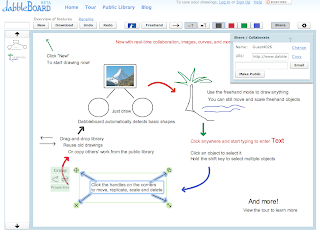
Dabbleboard: New online collaboration tool

Want to think and communicate visually with remote employees? Try Dabbleboard.

Dabbleboard is the latest online whiteboard tool helping teams communicate and share ideas from anywhere in the world. While there are other digital whiteboards out there, the biggest perks with Dabbleboard are how clean drawings come out and the ability to collaborate in real time.

Since most of us are very unskilled when it comes to drawing with a mouse, Dabbleboard recognizes common shapes (circles, lines, boxes, etc.) and redraws them neatly. Real-time collaboration makes it simple for multiple users to be in the program and drawing at the same time.

Dabbleboard produces attractive and easy to share documents. You can type and insert images anywhere on the board, stop working at any time and continue the drawing later by saving it for private or public use. Drawings can be emailed, downloaded in PNG format, or easily shared by sending a URL.

The coolest part - it’s free. So, take the tour and give it a try.

Dabbleboard online collaboration tool

Monday, August 4, 2008

Dancing improves employee productivity

Do you wish your company buzzed like a hive of bees? Everyone productive, industrious, organized?

The beehive is “the very model of business,” according to Benjamin Ellis at Redcatco. Before achieving any business success, you must first give your bees some free time and room to dance. Dancing is the key to improve employee productivity.

Ellis explains how even though it may look like bees never take a break from work, they actually spend a significant portion of their time wandering around the hive and dancing with their coworkers (fellow bees).

For parts of the day, bees travel aimlessly in hopes to stumble upon nectar, the sugar source for honey. When a bee comes across a fruitful patch, it returns to the hive and does a “waggle dance” for its coworkers demonstrating where the nectar is. The coworkers quickly get moving to collect the rest of the discovery.

“It is a process of innovation and discovery. A single bee, with the time to wonder, makes a discovery. It then shares the discovery with the hive. The process maximizes the return on the new discovery, while minimizing unfruitful searching by other bees.”

So, Ellis asks: “Do your employees dance?”

Like we said last week, give yourself and your employees time to be creative, time to wander in search of nectar. Energize your hive with just a little bit of free time and you may find some sweet success.

Friday, August 1, 2008

Schedule some time to think

Do you ever take a minute to just sit down and think? No Internet, no phone, no iPod, just you and your brain.

It’s a question Chris Morgan from Learn2Develop asked earlier this week, that got me thinking. When does anyone have time to just sit down and think?

In today’s world, our schedules are crammed back-to-back with meetings and deadlines, with hardly enough time to grab “lunch” from the vending machine.

It turns out some very smart (and busy) people have figured out how to fit thinking in daily. Barack Obama, Leonardo DaVinci and MindMap inventor Tony Buzan all take thinking pretty seriously.

"The most important thing you need to do is to have big chunks of time during the day when all you're doing is thinking," said Obama in a recent BBC article.

Innovative companies including Google and 3M allow employees to set aside 20% of their time to think and work on projects not immediately connected to core business goals.

If you think giving away free time will have employees playing video games and shopping online for shoes, think again - 50% of Google’s latest features were thought up during employee “free-time.”

“Aspiring innovators don't need pep talks. They need TIME. Time to think. And time to dream. Time to collaborate. And time to plan. Time to pilot. And time to test. Time to tinker. And time to tinker again,” says Mitch Ditkoff at The Heart of Innovation.

So, block out a little time on your schedule today for a meeting with yourself, a meeting just to think. Ready? All together now ... ohmmm ...

Tuesday, July 29, 2008

Present better, faster with Pecha Kucha

If you had less than seven minutes to give a presentation, what would you do? How about exactly six minutes and 40 seconds?

The answer - Pecha Kucha.

Pecha Kucha, from the Japanese word for “chatter,” is a new presentation style limiting time to six minutes and 40 seconds. The presentation is made of 20 slides, each shown for 20 seconds at a time.

Six minutes, 40 seconds, 20 slides. That’s it.

Pecha Kucha’s 20x20 format is aimed at keeping presentations concise, hanging onto audience attention and allowing as many people to present as possible. With presenters getting to the point faster, there’s more time left for discussion.

Ever since it was developed in 2003, the format has been replicated in over 80 cities across every continent. If Pecha Kucha keeps growing the way it has, we may never have to worry about “Death by PowerPoint” again.

The technique began in the architecture and design field, but has been making its way into the worlds of business and education. Just search YouTube for “Pecha Kucha” and you’ll find hundreds of videos demonstrating how the presentation technique works.

Give it a try at your next training event or make it a challenge around the office to see who can hold the best meeting with the best Pecha Kucha presentation.

Could you imagine what the workplace would be like if we all only had six minutes and 40 seconds to hold a presentation?

Thursday, July 24, 2008

Go to the carnival for new employee training ideas

The latest Carnival of HR is up at The HR Capitalist, full of HR goodies, a mini-roller coaster and even Bucky Covington from American Idol. Who would have thought he’d be interested in HR?

The entire list of ideas ranges from recruiting to compensation, but specifically regarding employee training, here are a few posts that may be of interest:

A suit straight off the rack won’t fit anyone perfectly, it needs to be tailored, customized. We have the technology to customize employee development programs for different careers, according to Wally Bock at Three Star Leadership.

Stop showing boring slide presentations and take a look at how Rowan Manahan from Fortify Your Oasis creates effective presentations using a visual approach.

Boost business performance with collaboration. John Ingham at The New Social Business asks, how much “collaboratieveness” does your company have?

Get the most out of employees with different learning and working preferences with a few, easy to implement tips from McArthur’s Rant.

Help two influential teams, HR and training, get on the same page when developing management training programs with tips on how to talk to each other from Dan McCarthy at Great Leadership.

We can all blame the FLSA for global warming, says Michael Moore at PA Labor & Employment. He recommends using the 4-day workweek to cut down on green house gas emission.

Tuesday, July 15, 2008

5 tips for employee training on a tight budget

The economy is down and the squeeze on your budget gets tighter everyday. Human resources and employee training budgets are the first places companies go to cut down spending, but don’t let go of hope just yet.

With some creative thinking and determination, you can still provide quality employee training even when your budget is taking a hit. Here are five simple tips on how to cut training costs without losing quality:

  1. Instead of sending your team to an outside training course, where you have to buy a ticket for each person and pay for travel expenses, find a comparable video training program to bring in house. You can train an entire room full of people for the cost of one video.


  2. Enroll your group in online training seminars. Similar to purchasing a video, you can train many for the cost of one and avoid those pesky travel expenses.


  3. Find trainers within your organization. In any organization there are those who already play the trainer role. Develop your in-house resources with “Train the Trainer” training programs.


  4. Use the company as the classroom. Look at different jobs in the company as training opportunities. If you’re training employees on leadership or teamwork, place employees in new roles around the office for a hands-on learning experience.


  5. Become a smart shopper. Use tools like TrainingTime.com to find and compare employee training programs that will work within your budget.

Just because your budget is shrinking, it doesn’t mean the quality of your training and development programs have to shrivel up with it. If you take the time to do some research and get a little creative, your training budget may not look so small after all.

Thursday, June 19, 2008

Video games at work increase employee productivity

Video games are making their way out of living rooms and into the office, but don’t be nervous. New evidence suggests gaming at work may benefit the workplace by decreasing worker stress and increasing productivity.

Rather than forbidding gaming, some U.S. companies are embracing gaming by replacing traditional coffee-fueled break rooms with areas specifically created for employees to play video games, according to a recent article from Entrepreneur.com. Companies that have created such rooms have seen a boost in employee morale and productivity, and gaming in the office has also helped attract younger employees.

“According to a recent survey by WorldWinner, a subsidiary of FUN Technologies Inc., more than 80 percent of online gamers who play on and off throughout the workday said they are able to better focus on work after playing. A reported 72 percent actually rely on game breaks to help them deal with job-related stress.”

Of the companies interviewed for the Entrepreneur.com article, none have had to set up rules or regulations for the game rooms. Some employees who have trouble regulating themselves may take advantage of the environment, but the companies agree that the positive results far outweigh any negatives.

While many companies have not embraced gaming as a positive way to reduce stress at work, it turns out employees will play anyway. Whether it’s on their phone or company computer, almost one in four workers game on the job.

Its estimated that as many as 80 million “white collar” workers in the U.S. play casual games, according to a survey by PopCap, the leading developer and publisher of casual games. Of those white collar workers surveyed, almost a quarter (24%) said they play at work along with 35% of CEOs, CFOs and other senior executives.

“It's natural that some business executives would also look to casual video games that they can play on their PC, mobile phone or BlackBerry during a work break, as a way to quickly relax and recharge their batteries,” said Carla Drum, a recognized expert on workplace issues, in a PopCap press release.

Those who play casual games at work acknowledged the following effects after taking a short game break at work:

  • 84% said they felt "more relaxed and less stressed out."
  • 52% said they felt more confident, more energetic, more productive and/or more mentally focused.

When asked to choose the single most important reason for playing casual games, 72% chose a reason related to improving their mental state.

Whether it’s taking a short break to chat on the phone or grab a cup of coffee, we all need to unwind every once in a while to refresh and regroup. Loading up a quick game may have the same effect, and without all the caffeine-jitters.

Tuesday, June 17, 2008

Video: Training in Second Life

If you find yourself lost when people start talking about Second Life or don’t think you could ever use it as an employee learning tool, there’s help.

Tony Karrer at eLearning Technology compiled a great little collection of Second Life learning videos to give you a sense of what it looks like and how it works. Take a look for some ideas on how it could be used as an effective employee training and development tool.

Here’s one video on some of the educational uses of Second Life, but you can find the full list at eLearning Technology.


For more videos with essential information for trainers, the HR Creations channel on YouTube is another convenient resource. HR Creations shares their personal expertise and has compiled playlists full of videos on topics such as training, employee issues and leadership.

Thursday, June 12, 2008

No creativity in the office? Buy some paint

More small businesses are using creative design to boost employee creativity. From electronic dance mats to white board covered walls, offices are implementing new creative tools into office design.

A recent article titled “Small businesses say no to a dull office” from the UK Times Online, examines small businesses that are drawing inspiration right off the walls of their workplace.

Shokk, a youth fitness firm that owns a number of youth-only, maintains a corporate environment that mirrors what their company does for the public. Employees are encouraged to use skateboards to travel around the office and relax by flying remote-control planes above their desks.


“It’s so easy these days to hide behind a PC and send out e-mails. Getting everyone onto the dance mat for 15 minutes followed by a brain-storming session has proved extremely effective,” said Kieran Murphy, Shokk managing director.

Along with fostering creativity in the office, the rapidly growing company hopes that its dynamic office environment will help attract fitting employees.

The Chief Happiness Officer (CHO) also thinks physical office space matters to enhance employee productivity, creativity and happiness.


“Many companies have buildings that are sleek, modern, architectural glass-steel-and-cement sculptures on the outside – and cubicle wastelands on the inside. These companies need to remember that most employees tend to work inside the building.”

Check out the CHO’s post on some “seeeeeriously” cool workplaces for some visual inspiration.

Gray cube walls do little to help foster employee creativity and do even less in reflecting the company culture you strive to achieve. It doesn’t mean you have to go out today and revamp your entire office. It could take as little as a can of paint or an interesting piece of art to start inspiring creativity at your office.

The CHO also shares some cool ways to “pimp” your workplace and add a little color to your workday. Here are a few favorites:

Softwalls – walls made from paper and felt that can be twisted into almost any shape you want.

Bean bags – you know what they are. Pick some bright colors, throw in a coffee table and you’ve got a super comfortable meeting room.

The Conference Bike – 1 steers, 7 pedal. Looks a little clownish, but also a lot of fun.

Art table – find a cool table in a cool shape or color and let the creativity flow.

Brought to you by www.gneil.com